
Blog
Cord Tissue Stem Cells: Benefits, Myths & Real Medical Uses
Becoming a parent can be a little challenging, especially in today’s fast-changing world. You might be reading this over your morning coffee, feeling absolutely blissful about the little life slowly growing inside you, yet tense about the pressures and the extra responsibility of keeping the child in the uncertainties of climate change and evolving diseases. It’s natural to wonder, “How do I protect my newborn from what the future might bring? ”
Honestly, there’s no perfect answer, but some of the right decisions that you take today can be beneficial for tomorrow. Like many parents in Singapore, they are turning to cord tissue stem cell preservation for their child’s future health and peace of mind. Not because it’s a magic shield, but because it has the potential to offer real medical care, like supporting treatment for conditions like immune disorders or injuries. So let’s explore the benefits of cord tissue stem cells, clear the myths, and help you decide if it’s worth considering for your family.
What are Cord Tissue Stem Cells
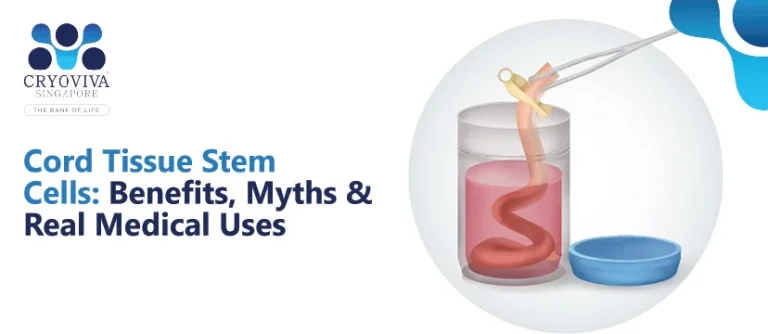
Cord tissue stem cells are known as mesenchymal stem cells (MSCs). They are found in the connective tissue of a newborn’s umbilical cord. If preserved at the time of birth by contacting Cryoviva Singapore (Known for cord tissue and cord blood banking since 2014), the doctor can use MSCs for their ability to grow into bone, cartilage, muscle, and nerve cells.
Characteristic of Cord Tissue Stem Cells
- Location: Can be found in the umbilical cord’s connective tissue, particularly in Wharton’s jelly.
- Type: Mesenchymal stem cell (MSC); they differ from cord blood stem cells, which are hematopoietic stem cells (HSCs).
- The Unique Benefits They Offer:
- Doctors can guide them to develop into bone, cartilage, muscle, and nerve cells.
- The scientific community is exploring them for regenerative medicine for repairing and healing damaged tissues and organs.
- Clinical trials are being conducted to explore their potential benefits in heart disease, diabetes, and spinal cord damage.
- Differ from Cord Blood Stem Cells:
Both stem cells that come from cord tissue and cord blood have their own benefits; many parents choose to preserve both for wider disease coverage. Unlike cord blood stem cells, stem cells from cord tissue do not require matching for the same person or a close family member and can multiply more easily.
What are the Potential Benefits of Cord Tissue Stem Cells For My Child
Before considering the umbilical cord stem cells preservation option at the time of delivery, it’s a valid question to ask, “Is it worth considering, and what are the benefits?”
We have listed the potential benefits for you, and it’s up to you to decide whether to opt for it or not for your child’s or family’s future health.
Here are the potential medical uses:
Bronchopulmonary Dysplasia (BPD)
Cord tissue stem cells have shown potential benefits in BPD. They can help promote lung tissue repair, lower inflammation, and reduce lung tissue injury.
Hypoxic-Ischemic Encephalopathy (HIE)
An early clinical trial shows that stem cell therapy improves cognitive and motor function. They may help reduce inflammation, encourage neurogenesis (the growth and development of nervous tissue), and stimulate nerve and vascular repair.
Cerebral Palsy
There is no cure for cerebral palsy yet, but comprehensive treatment along with therapy can help manage the symptoms, making the child more independent. Stem cell therapy has the potential to improve motor function (walking, running, writing) in some children with cerebral palsy.
Autism Spectrum Disorder
In a 2019 study, improvements in autism spectrum disorder symptoms and in inflammatory cytokine levels were observed in a small group of children.
Type 1 Diabetes
2025 research shows that stem cell therapy might protect insulin-producing cells and regulate immunity in children, which can be beneficial for addressing type 1 diabetes.
Orthopedic Conditions (e.g., Cartilage/Bone Injuries)
These stem cells have the unique ability to develop into bone or cartilage cells; this shows their potential to help repair orthopedic injuries and for future regenerative uses.
Note: Most MSC therapies are not FDA approved, are in their initial phase, and need more extensive research for further safety and potential use. But the results from these initial studies are promising.
Myths About Cord Tissue Stem Cells
You need to be aware of these myths so that they do not become a hindrance to you while making the right decision.
Cord Tissue Stem Cells Are Not Used in Medicine
What’s the truth?
They have been actively used in clinical trials and investigational therapies worldwide for their promising tissue repair, motor function improvement abilities, etc.
Cord Tissue Stem Cells Lose Their Effectiveness Over Time
What’s the truth?
With modern cryopreservation (Freezing at −190 degrees Celsius), like at Cryoviva Singapore, these cells do not lose their effectiveness over time if preserved well.
You Can Decide to Store the Cord Tissue Stem Cell After Delivery
What’s the truth?
You need to make this decision before delivery, as collection can only happen at birth. If decided, ensure you have the stem cell collection kit at the time of delivery.
Cord Tissue Stem Cells Preservation Is Expensive
What’s the truth?
Private stem cell banks like Cryoviva Singapore offer affordable pricing between 5,000 and 8,000 SGD so that it can be accessible for all parents living in Singapore. Contact Us
Conclusion
Yes, parenting can be so much more demanding now than ever before, but you can make it simpler, at least when it comes to your future child, i.e., by preserving their stem cells through cord blood or cord tissue. Some parents choose to preserve both. Now the ball is in your court; do your own deep research and decide if you are ready to provide this safety net of stem cells for your family’s future.
FAQ's
How do stem cells repair damaged tissue?
Stem cells can be guided into becoming specific cells that can be used in individuals to regenerate and repair tissues that have been damaged or impacted by disease. They differentiate into cell types required for tissue regeneration, such as fibroblasts or endothelial cells, to replace damaged areas. They facilitate tissue repair by releasing growth factors (e.g., TGF-β, PDGF) and cytokines (e.g., IL-10).
Are stem cells good for knee pain?
Studies have observed that stem cells have the unique ability to differentiate into cartilage, ligament, tendon, and bone cells, supporting the repair and regeneration of complex knee injuries. While overall results are promising, more research is required.
How long does umbilical cord stem cell therapy last?
The effectiveness of stem cell therapy may vary based on individual and treatment-related factors. While many individuals get relief that lasts anywhere from several months to several years, the duration of effectiveness depends on the type and severity of the condition being treated.

