
Blog
Cabbage Leaves for Breast Engorgement: Does It Really Work?
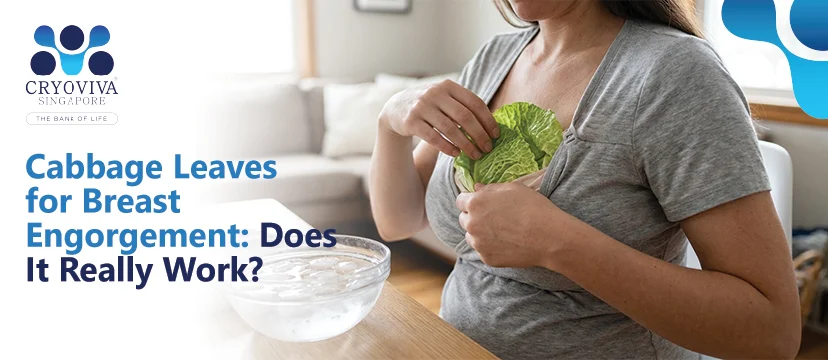
Breast engorgement (also known as early postpartum engorgement) is swelling of your breasts that happens soon after delivery. It is common in the 1st week after giving birth, and by the time you’re at two weeks postpartum, engorgement generally eases.
Breast engorgement comes with swelling, firmness, and pain in your breast, and some people feel fever and chills. Doctors generally recommend gentle massage and other techniques to ease these symptoms and help you feel better.
Many women also use cabbage leaves for breast engorgement, but the real question is “are cabbage leaves good for sore breasts?” Yes, evidence has suggested that they can reduce pain and hardness effectively. However, there are other studies showing weak evidence, and cabbage leaves have no superiority over other cold compresses.
Cryoviva Singapore says, always consult your doctor if the condition persists in severe cases, as engorgement can signal issues like mastitis (inflammation or infection often starting from untreated engorgement or blocked ducts).
What is Breast Engorgement
It happens when your breasts feel extremely full with blood and milk, to the point where they feel painful and hard.
Your breast may feel like:
- Overly full
- Hard
- Heavy
- Swollen
- Tender
- Throbbing or aching pain
- Flattened nipples that make latching hard
- Sometimes, a slight fever or chills
The Main Cause
The cause of breast engorgement is an increase in the amount of blood and lymph (a colorless, watery fluid) in your breasts. Thankfully, by the time you’re at two weeks postpartum, engorgement usually eases, but if it doesn’t, consult your doctor.
Relief Techniques for Early Postpartum Engorgement
- Use frequent feedings or pumping
- Warm compresses before feeding for let-down
- Gentle massage
- Proper latch checks
- Supportive bras
- Cold compresses (like cabbage leaves or gel packs)
Note: If the symptoms are severe or feverish, consult a lactation consultant or doctor.
Does Cabbage Leaves Helpful in Breast Engorgement
Yes, evidence suggests that cabbage leaf treatment helps lower pain in breast engorgement and lengthens breastfeeding duration.
It shows its action through the following proposed mechanism:
Cooling Effect
Chilled leaves act as a cold compress. They help constrict blood vessels decreasing swelling and hardness of tissue.
Anti-inflammatory Properties
Cabbage contains sulforaphane and other compounds that exert anti-inflammatory properties. This eases pain and swelling more effectively than heat in some studies.
Enzyme Breakdown
Enzymes in crushed leaves might mimic milk fat-digesting action. This softens engorged tissue without decreasing overall milk production when used for a short time.
How to Use Cabbage Leaves for Breast Engorgement Relief
Here are the simple steps to use:
Preparation
- Choose and wash the fresh green cabbage.
- Chill whole leaves in the refrigerator for 20-30 minutes.
- Gently remove 2-3 large outer leaves per breast and discard any wilted parts.
Application
- Trim leaf tips to fit the breast shape.
- Crush or roll the leaves lightly with a rolling pin. This will release juices and make them flexible.
- After feeding or pumping, place leaves directly on the engorged breast, covering it fully.
- Make sure to leave the nipple exposed.
- Hold in place for 20 minutes using a loose nursing bra, or until leaves wilt and are warm.
Aftercare
- Discard used leaves.
- Rinse breasts with warm soapy water (avoiding sore nipples).
- You can repeat 2-3 times daily as required.
Breast Engorgement vs. Hyperlactation
- Hyperlactation (oversupply) is when your body produces more milk than your baby or babies need.
- Engorgement can be a symptom of hyperlactation. However, engorgement doesn’t always mean there’s an oversupply.
Breast Engorgement vs. Mastitis
Here is the key difference:
Key Aspects | Engorgement | Mastitis |
Primary Cause | Milk backup and fullness | Inflammation and Infection |
Location | Both breasts, diffuse swelling | Localized area (wedge/lump) |
Fever | Mild/temporary or none | High fever, chills perifit+1 |
Other Symptoms | Tightness | Redness, heat, fatigue, body aches |
In summary: Engorged breasts will normally feel tight or hard, while mastitis is more often characterized by inflammation. Mastitis associated with breastfeeding is also known as lactational mastitis.
Conclusion
Cabbage leaves for engorged breasts are a complementary therapy; always combine them with frequent nursing. Cryoviva Singapore (stem cell preservation bank) says, stop applying if there is no relief in 48 hours and consult your doctor or lactation consultant for the right care.
Looking for Ways to Protect Your Baby’s Future Health
Then, like many parents in Singapore, you can also consider an option like cord blood storage for stem cell preservation from Cryoviva Singapore.
Cord blood collection is a non-invasive, painless, and risk-free procedure for mother and baby just after delivery. It has the following benefits:
- Safeguard from more than 80 diseases in the future, including cancers, blood disorders, immune deficiencies, and genetic conditions.
- Support healthy immune systems when required.
Disclaimer: This blog is for informational purposes only. For breast engorgement issues, especially during pregnancy, contact your healthcare professional only.
Note: This content is medically reviewed by the Cord Blood Collection Team of Cryoviva Singapore, a leading private cord blood bank in Singapore that has successfully stored over 10,000 umbilical cord blood and cord tissue units. All content is medically reviewed to ensure reliability and clinical accuracy.
FAQ's
How to tell the difference between engorgement and clogged ducts?
Engorgement is general breast fullness, hardness, and tightness impacting the whole breast. Clogged duct due to a blocked milk duct is a localized, tender, hard lump or wedge in one area, potentially red and warm.
How do you relieve breast engorgement?
Follow your doctor’s advice, nurse or pump frequently, use warm compresses before feeding and cold packs after for swelling, gently massage, or try cabbage leaves.
How to stop breast engorgement overnight?
There is no such immediate overnight relief. However, nurse or pump frequently to soften the breast for comfort, use cold compresses between feeds, try cabbage leaves, and wear a supportive bra; these methods can provide relief.

